Could a downtown Newburyport condo be the second home that finally feels easy to own and easy to enjoy? If you want a place where you can arrive for the weekend, park once, and spend more time walking to dinner, the riverfront, or Market Square, this part of Newburyport deserves a close look. The key is knowing what downtown condo ownership really looks like here, from historic building quirks to parking and condo rules. Let’s dive in.
Why downtown Newburyport fits second-home buyers
Downtown Newburyport is the city’s historic commercial and civic center. The city broadly defines the downtown business area as the zone bounded by High Street, Federal Street, the Merrimack River, and Boardman Street, with a pedestrian-first street pattern shaped by retail, office, service, and government uses.
For a second-home buyer, that setup can be appealing because it supports a low-maintenance, walkable lifestyle. A condo can give you a compact home base with less exterior upkeep than a single-family property, which matters when you are not in town full time.
The area also benefits from the Clipper City Rail Trail, which links the commuter rail station to downtown and the riverfront. That connection strengthens the low-car appeal for weekend use and shorter stays.
What downtown condo inventory looks like
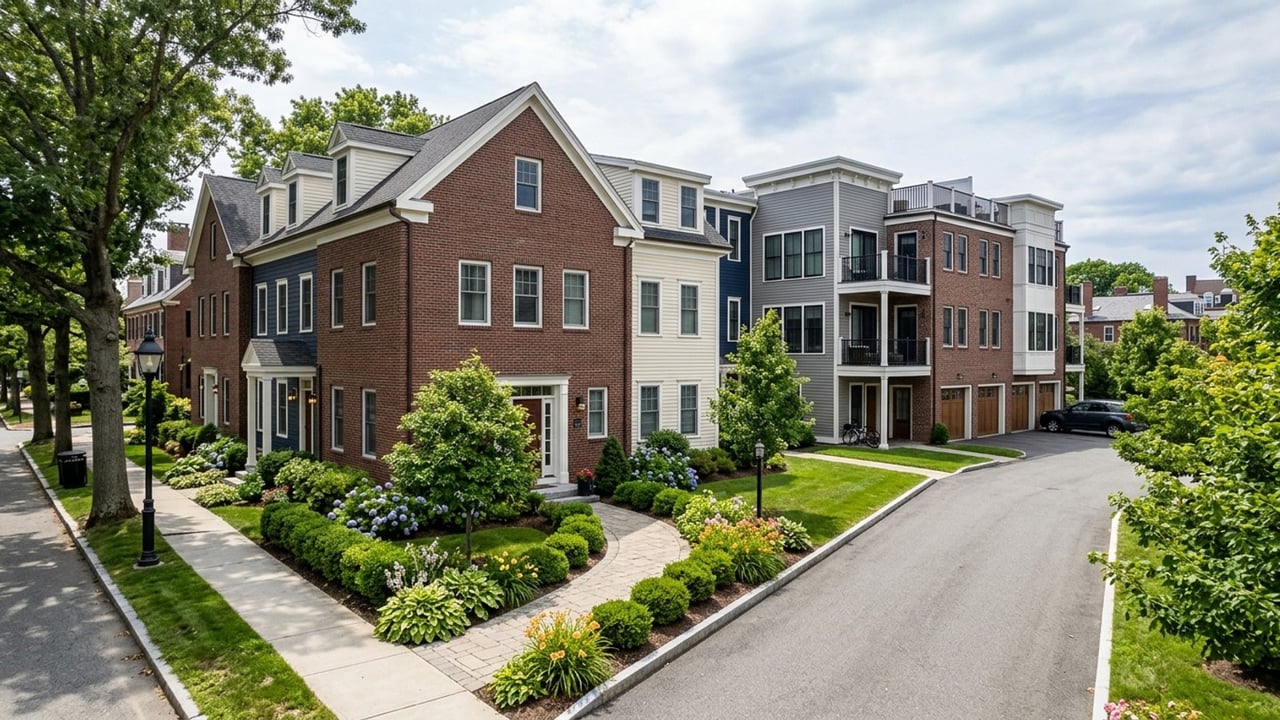
Downtown condo inventory in Newburyport often feels different from what buyers expect in a coastal town. The city’s master plan notes that the highest density of homes is within and around downtown, and that most of the city’s residential structures with three or more units are in the same area.
In practical terms, that often means condos in mixed-use buildings, multi-unit properties, and converted older structures rather than large condo campuses. If you are picturing a newer suburban-style complex with broad parking fields and uniform layouts, downtown Newburyport is usually not that.
Historic character shapes the experience
A major part of downtown’s appeal is its architecture. The Market Square Historic District was rebuilt after the 1811 fire, and many buildings there are Federal-style brick row houses with commercial space on lower levels.
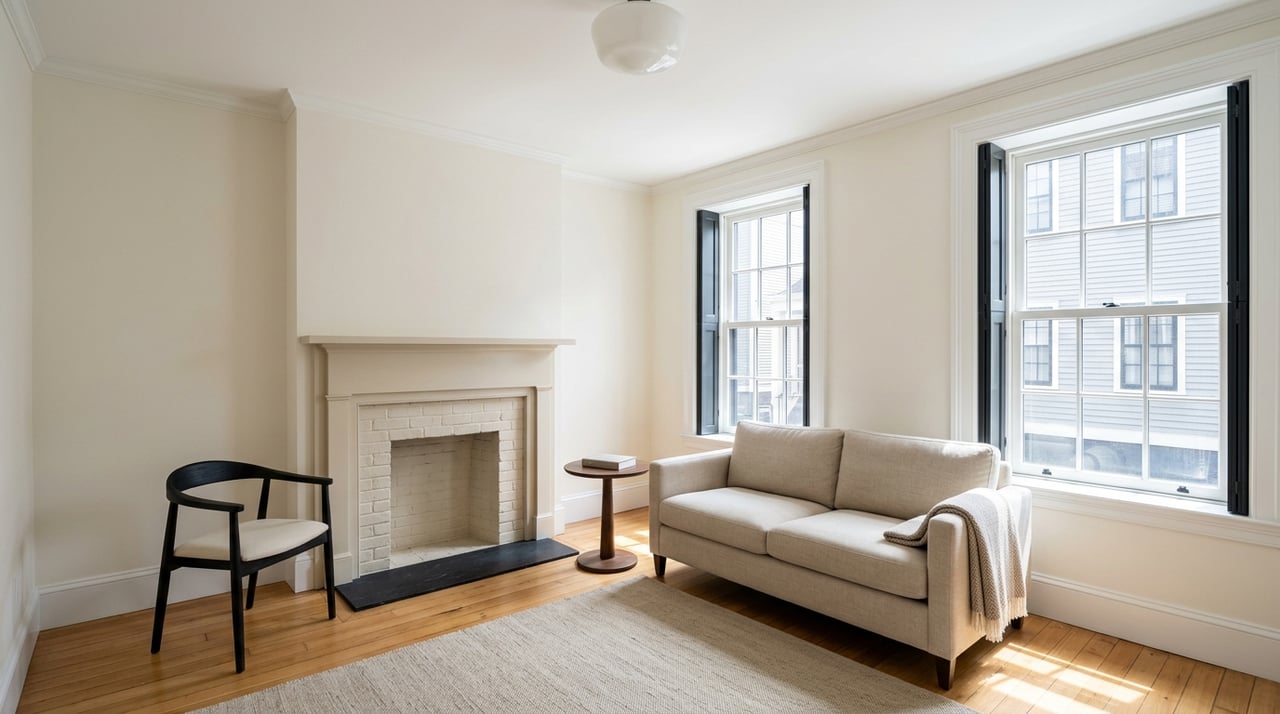
The broader Newburyport Historic District includes homes, commercial buildings, factories, and institutional buildings from several eras. That helps explain why downtown condos can feel older, denser, and more urban than buyers expect from a North Shore second-home market.
Older buildings may bring extra review
Historic setting can be a benefit, but it can also affect future plans. The Newburyport Historical Commission is the city’s official historic-properties board and reviews demolition-delay matters and other projects within the Newburyport Historic District.
If you think you may want to replace windows, alter an entry, update a deck, or change exterior features later, verify whether the building has an added historic review layer. You do not want to assume exterior work will be simple just because you own the unit.
Why parking should be your first filter
If there is one issue to move near the top of your checklist, it is parking. Newburyport’s housing plan says parking is challenging downtown and in nearby older neighborhoods, especially on snow days, summer weekends, and during festivals.
That matters even more when the home is not your full-time residence. If you arrive late on a Friday or use the property during busy seasons, convenience can depend heavily on whether your parking is truly private and reliable.
Not all parking rights are equal
When you review a condo, ask whether parking is deeded, assigned, permit-based, or shared. Those are very different arrangements, especially in a downtown location where city parking is tight.
The city’s current parking brochure lists resident parking permits at $15 per year, senior resident permits at $5 per year, employee permits at $240 per year or $60 per quarter, and garage permits at $60 per month or $720 per year for residents and $80 per month or $960 per year for non-residents.
Just as important, the brochure states that permits are not for on-street parking and that time limits still apply. The parking ordinance also notes that a permit does not guarantee a space.
For many second-home buyers, a deeded or clearly assigned space can carry more day-to-day value than a permit arrangement. In a dense area, clarity matters.
Condo fees, insurance, and association rules
Owning a condo is different from owning a detached house. Each unit is individually owned, while exterior property and common areas are jointly owned by the community.
Condo fees often cover exterior and common-area maintenance and may also include items like water, sewer, trash, insurance, or reserves. Those fees are usually separate from your mortgage, so they need to be part of your monthly carrying-cost calculation from the beginning.
Questions to ask before you buy
A downtown condo can be a great second home, but only if the documents support the lifestyle you want. Before you commit, review these questions carefully:
- How large is the reserve fund?
- Are there any current or planned special assessments?
- What exactly does the condo fee cover?
- Are unit modifications allowed?
- What does the master insurance policy cover?
- Is parking included, assigned, or separate?
- Are rentals restricted by the condo documents?
Association finances matter because future repairs in older or mixed-use buildings can be expensive. A budget that looks manageable today may feel very different if reserves are thin and major work is coming.
Insurance details matter more than many buyers expect
Insurance is another area where details count. You will want to understand whether the master policy covers common areas only or also includes parts of the unit interior, and what repairs fall to you as the owner.
That question becomes especially important in older downtown buildings, where building systems and shared components can be more complex than in newer construction. Clear answers up front can help you avoid unpleasant surprises later.
If you may rent it occasionally
Some second-home buyers want flexibility to use the condo personally and rent it from time to time. If that is part of your plan, you need to review both condo documents and city rules before you buy.
Newburyport defines a short-term rental as a dwelling unit or bedroom used for fewer than 30 consecutive days. The city requires licensing and inspections, and condo applicants must provide an affidavit of condominium-association approval.
The city guide also limits many short-term rental units to 3 bedrooms and 6 guests. It also notes that some condominium units are ineligible if the condo documents prohibit that use.
Rental flexibility is never automatic
Even if a unit seems like a strong candidate for occasional rental use, do not assume it is allowed. A condo’s own documents may be more restrictive than your expectations, and city approval still depends on meeting local requirements.
For a second-home buyer, this is one of the most important early-stage questions. It is better to know the rules before you fall in love with the property.
Downtown versus nearby alternatives
Downtown is not the only second-home option in Newburyport, but it offers a very specific lifestyle. It tends to be the best fit if you value walkability, historic character, and lower-maintenance ownership over extra space and privacy.
Nearby areas offer different tradeoffs. The city’s master plan describes the West End as largely single-family by-right, while High Street functions more as a residential corridor than a step-out-to-dinner downtown setting.
The South End is another older residential area with its own character and housing mix. Depending on your goals, a nearby neighborhood may suit you better if you want a quieter setting or a property that lives more like a primary home.
Plum Island offers a different second-home feel
If your priority is a more seasonal or beach-oriented escape, Plum Island is often the clearest alternative. The city’s housing plan describes it as a barrier island with older cottages and newer homes, and notes the conversion of former summer cottages to year-round residences.
The same plan also flags flood and erosion concerns and notes that the city adopted a Floodplain Overlay District to regulate development in flood-hazard areas, including risk areas along the Merrimack and on Plum Island beaches.
That does not make Plum Island a poor choice. It simply means the second-home conversation there is different from the downtown condo conversation, especially around maintenance, exposure, and use patterns.
A smart checklist for downtown condo buyers
If you are seriously considering a downtown Newburyport condo as a second home, focus on the details that shape everyday use. The right property is not just attractive. It also needs to work smoothly when you arrive, stay, and leave.
Here is a practical review list to keep handy:
- Confirm whether parking is deeded, assigned, shared, or permit-based.
- Review condo fees and what they actually include.
- Ask about reserve funding and any planned assessments.
- Understand the master insurance policy and owner responsibilities.
- Check whether exterior changes may face historic review.
- Verify any rental restrictions in the condo documents.
- If rental use matters, confirm the city licensing and inspection requirements.
A well-chosen downtown condo can offer a polished, lock-and-leave lifestyle in one of the North Shore’s most distinctive small-city settings. The right fit usually comes down to careful due diligence, not just charm.
If you are weighing downtown Newburyport against nearby neighborhoods, or want help identifying condos with the right mix of walkability, parking, and flexibility, Zaniboni Luxury Group offers a high-touch, local approach built around lifestyle fit, market insight, and concierge-level guidance.
FAQs
What makes downtown Newburyport appealing for a second home?
- Downtown Newburyport offers a walkable, pedestrian-first setting with access to shops, services, the riverfront, and the Clipper City Rail Trail, which can make part-time ownership feel easier and more convenient.
What type of condo buildings are common in downtown Newburyport?
- Downtown condo inventory often includes mixed-use buildings, multi-unit properties, and converted older structures rather than large suburban-style condo developments.
Why is parking so important when buying a downtown Newburyport condo?
- The city identifies parking as challenging downtown, especially on snow days, summer weekends, and during festivals, and city permits do not guarantee a space.
What should you review in a Newburyport condo association before buying?
- You should review reserve funding, special assessments, what the condo fee covers, insurance coverage, modification rules, parking arrangements, and any rental restrictions.
Can you use a downtown Newburyport condo as a short-term rental?
- Possibly, but Newburyport requires licensing and inspections for short-term rentals under 30 consecutive days, and condo applicants must provide proof of condominium-association approval.
How does downtown Newburyport compare with Plum Island for a second home?
- Downtown usually fits buyers who want walkability and lower-maintenance ownership, while Plum Island may better suit buyers who want a more beach-centered lifestyle and are comfortable evaluating flood and erosion considerations.