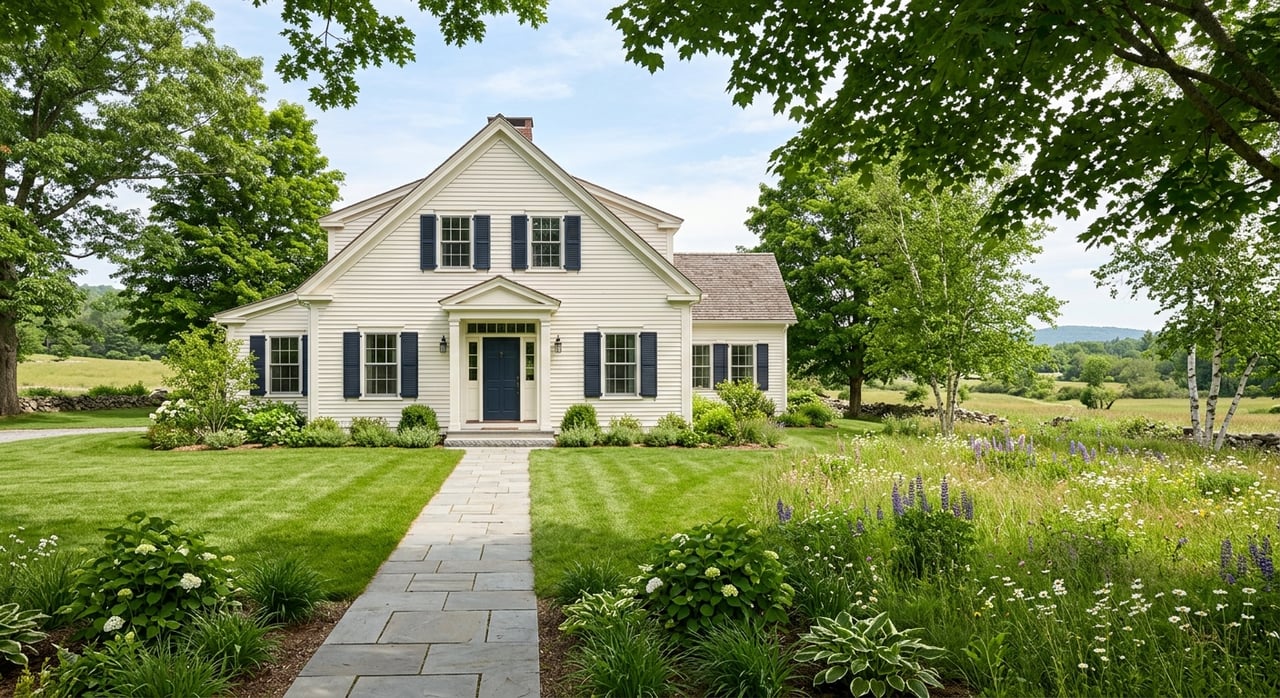
If you are thinking about buying land and building a custom home in Newbury, the land itself matters more than almost anything else. A parcel that looks beautiful on paper can still come with zoning limits, wetlands constraints, septic hurdles, or floodplain issues that change what you can actually build. The good news is that when you understand those factors early, you can make smarter decisions and avoid expensive surprises. Let’s dive in.
Why the parcel comes first
In Newbury, the feasibility of a custom home often starts long before design plans or finish selections. The town’s zoning framework is shaped in part by a goal of preserving agricultural heritage and open space, which is one reason site context plays such a big role in the building process. You can review that intent in the Town of Newbury zoning bylaw.
That means your first question is not just, “Do I like this lot?” It is, “Can this lot realistically support the home I want to build?” Before you fall in love with architectural drawings, you will want to confirm zoning, frontage, upland area, wetlands conditions, septic feasibility, and utility access.
Check zoning before design
For many buyers, the starting point is understanding the zoning district and the dimensional rules attached to it. In Newbury’s R-AG district, a single-family residence requires 40,000 square feet of lot area and 125 feet of frontage, and at least 80% of the minimum lot area must be contiguous upland outside wetlands and the Parker River-Essex Bay ACEC, according to the use and dimensional regulations.
This is where buyers can get tripped up. A lot may seem large enough overall, but if the usable upland area is limited or the frontage is tight, building may still be difficult. Setbacks and height limits also matter, so a parcel’s shape can be just as important as its total size.
Why frontage and upland matter
Frontage affects whether a lot meets basic zoning requirements. Upland matters because not all square footage is equally usable when wetlands or protected resource areas are involved.
In practice, that means two lots with the same acreage can have very different building potential. One may support a straightforward custom home, while the other may need a much smaller footprint, added permitting, or a rethink of the site plan.
Understand Newbury’s permit path
Newbury’s review process is split across several local boards and departments. The Planning Board handles subdivisions, special permits, site plan review, and Approval Not Required determinations, while the Conservation Commission, Board of Health, and Building Inspector each have separate roles.
This matters because buying land is rarely a one-office process. The Planning Board addresses subdivision and site-plan issues, the Conservation Commission reviews wetlands matters, the Board of Health handles Title 5 septic questions, and the Building Inspector addresses building code and floodplain issues.
Timing matters in applications
If a parcel needs Planning Board action, Newbury asks that permit applications be submitted by noon on the Wednesday one week before the meeting. That is a small detail, but it is a good example of why planning ahead matters when you are trying to keep a project moving.
A well-organized due diligence timeline can save you weeks. It can also help you avoid spending money on surveys, plans, or engineering before you understand the town’s review sequence.
Test septic and water access early
For many land buyers in Newbury, septic feasibility is one of the biggest early checkpoints. According to Newbury’s Subdivision Regulations, proposed new lots require a passing perc test and two acceptable test pits, observed by an approved soil evaluator and witnessed by the Newbury Health Agent.
If a lot cannot support septic, that can change the entire value of the parcel. Even when a home is technically possible, septic design can affect where the house, driveway, and outdoor living areas can go.
Public water and sewer are not everywhere
Newbury’s water and sewer information notes that Newburyport water and sewer service is available for Plum Island and parts of Old Town. For other parcels, you should verify water supply and septic needs as early as possible.
That is especially important if you are comparing multiple lots. One parcel may have fewer constraints simply because the utility picture is more straightforward.
Know the Title 5 context
Massachusetts also has statewide septic rules that can affect land or home purchases. The state’s Title 5 guidance explains that septic inspections are generally required on property transfer, with inspections usually valid if completed within two years before or six months after the transfer, subject to certain exceptions.
If you are buying land with an existing structure or evaluating a teardown scenario, this is another item to review early with your team. It helps you understand both compliance and cost.
Review wetlands and conservation issues
Wetlands are a major part of land feasibility in Newbury. Under the Massachusetts Wetlands Protection Act, protected interests include groundwater, water supply, flood control, storm damage prevention, pollution prevention, shellfish, fisheries, and wildlife habitat.
If your parcel is near wetlands, resource areas, or low-lying land, you should expect that conservation review may shape your plans. This does not always mean you cannot build, but it often means the placement, disturbance area, and filing requirements will matter.
Newbury’s Conservation Commission role
The Newbury Conservation Commission guides residents through wetlands permitting, and the town also offers a homeowner-focused guide intended to help buyers understand the process. That is a useful reminder that conservation review is part of normal due diligence for many parcels.
The town’s submittal checklist states that filings should include site plans, scaled drawings or photos, and resource-area delineations, and only complete submissions receive hearing dates. In other words, incomplete filings can slow a project down quickly.
Plum Island and inland parcels differ
Newbury’s local wetlands bylaw is stricter than state law, but the town’s filing materials indicate that the local bylaw applies only to Plum Island. For inland pastoral parcels, state wetlands review is the main baseline, while Plum Island lots may face added local standards.
That distinction is important if you are choosing between a coastal lot and an inland lot. The review process may look different depending on where the parcel is located.
Screen for floodplain issues
Floodplain review should also happen early, especially for coastal or low-lying parcels. Newbury’s Building Inspector also serves as the town’s flood plains administrator.
If floodplain constraints apply, they can influence building elevation, design costs, and even the practical layout of the home. This is another reason it makes sense to evaluate the site first and the architecture second.
Respect the right-to-farm context
One of the most important lifestyle factors in Newbury is the town’s agricultural setting. Under Newbury’s Right-to-Farm bylaw, farming activities may include noise, odors, dust, and fumes, and the bylaw requires a disclosure to buyers or occupants before transfer.
This is not a negative. It is simply part of understanding the setting and character of the community. If you are buying land in Newbury, especially in a more pastoral area, you should know that nearby agricultural operations may shape the day-to-day experience of the property.
Why this matters in planning
State law also provides that local zoning and bylaws may not unreasonably regulate commercial agriculture, as outlined in Massachusetts General Laws Chapter 40A, Section 3. So if you are building in Newbury, it is smart to think not only about the house itself, but also about how the parcel fits into the surrounding land use.
That perspective can help you make a better long-term decision. It can also prevent surprises after closing.
Design for flexibility and resale
Once the parcel checks out, then it makes sense to think about design. A custom home should reflect your lifestyle, but if you want to protect long-term resale appeal, it often helps to keep the layout practical, flexible, and site-sensitive.
Buyer preference research from the National Association of Realtors points to features like flexible rooms, home offices, patios, outdoor fireplaces or kitchens, and walk-in pantries as broadly attractive amenities in newer homes. These kinds of spaces can work well because they serve everyday living without locking the home into a highly specific use.
Avoid overpersonalizing the build
NAR’s 2025 remodeling research, published by NARI, notes that resale recovery varies by project and that choices made for personal taste may not always line up with what supports future resale. In a Newbury custom build, that supports the case for a timeless plan rather than highly niche finishes.
In practical terms, that may mean prioritizing:
- Flexible bonus spaces
- A functional home office
- Durable outdoor living areas
- Storage that supports year-round use
- A layout that responds naturally to the site
A smart Newbury land-buying checklist
Before you commit to a parcel, it helps to work through a clear feasibility checklist.
- Confirm the zoning district and allowed residential use
- Verify lot area, frontage, setbacks, and usable upland
- Check for wetlands, buffer areas, and conservation filing needs
- Evaluate septic feasibility with perc testing and test pits if required
- Confirm water and sewer availability, if any
- Screen for floodplain constraints
- Understand surrounding agricultural context and right-to-farm disclosure requirements
- Review whether the parcel may need Planning Board action, ANR review, or subdivision approval
The key idea is simple: treat the parcel as the main decision point. When the lot works, the design process becomes clearer, more efficient, and more enjoyable.
Final thoughts on building in Newbury
Buying land and building a custom home in Newbury can be incredibly rewarding, but the best outcomes usually start with disciplined due diligence. Zoning, upland area, wetlands, septic, floodplain conditions, and right-to-farm context all deserve attention before you invest heavily in plans or finishes.
If you are considering land in Newbury and want a thoughtful, concierge-level approach to evaluating your options, Zaniboni Luxury Group can help you navigate the process with local insight and a practical eye toward long-term value.
FAQs
What should you check first when buying land in Newbury?
- Start with zoning, frontage, lot area, contiguous upland, wetlands, septic feasibility, and utility access before moving into design work.
How much lot area is needed for a single-family home in Newbury’s R-AG district?
- In the R-AG district, a single-family residence requires 40,000 square feet of lot area and 125 feet of frontage, along with upland requirements under the zoning bylaw.
Does every buildable lot in Newbury need septic review?
- Not every parcel will have the same utility setup, but many lots outside Plum Island and parts of Old Town should be checked early for septic and water-supply needs.
How do wetlands affect custom home plans in Newbury?
- Wetlands can affect where you place the home, how much site disturbance is allowed, what plans must be submitted, and whether conservation review is required.
Are there special rules for building on Plum Island in Newbury?
- Plum Island lots may face additional local wetlands standards beyond the state baseline, so coastal parcels should be reviewed carefully early in the process.
What does Newbury’s right-to-farm bylaw mean for buyers?
- It means farming activities may create noise, odors, dust, or fumes, and buyers must receive a disclosure before transfer so they understand the area’s agricultural context.
What custom home features tend to support resale in Newbury?
- Flexible rooms, home offices, useful storage, and practical outdoor living spaces tend to support broader appeal better than highly personalized design choices.